- 1234567890
- info@gmail.com
- Mon - Fri: 9:00 - 18:30

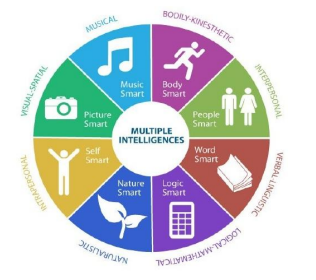
Dr. Howard Gardner, a renowned scientist, psychologist and educationist, was the Professor of Cognition and Education at the Howard Graduate School of Education and Senior Director of
Harvard Project Zero. Among numerous honors, Gardner received the Mac Arthur Prize Fellowship in 1981. He had received honorary degrees from twenty-two colleges and universities.
In 2005 he was selected by foreign policy and prospect magazines as one of 100 most influential
public intellectuals in the world. The author of over twenty books translated into twenty-seven languages and several hundred articles, Gardner is best known in educational circles for his “Theory of Multiple
intelligence” proposed in 1983, which has been widely accepted by science all over the world. And today
there are many schools across the world that are running on the education pattern of “Theory of Multiple
Intelligence”. He has also written extensively on creativity, leadership, and professional ethics. His latest
book Five Minds for the Future was published in April 2007
Thisintelligence has to do with words, spoken or written. People with high Linguistic Intelligence have good command over their words,
language and are expressive in nature. They are typically good at reading, writing, telling stories and memorizing dates and words. People with high Linguistic Intelligence tend to learn through reading, taking
notes, listening lectures. They are good in discussion and debate. They are
good at explaining to others, teaching and delivering speeches.

* Play word games (e.g.scrabble, crosswords, up words).
* Join a book club.
* Attend a workshop on writing.
* Record yourself speaking and listen to the playback.
* Visit the library and bookshopsregularly.
* Join a speaker’s club.
* Subscribe to a high-quality newspaper.
* Read a new book every month.
* Prepare an informal ten-minute talk for a business or community event on any subject or event.
* Learn to use a word processor.
*Listen and watch recordings of famous orators, e.g. Martin Luther King, Winston Churchill and Adolf Hitler.
* Keep a diary or write 250 words a day about anything in your mind.
* Find opportunities to tell storiesto children and adults.
* Make up your own riddles and jokes.
* Attend a speed-reading seminar.
* Teach an illiterate person to read

Thisintelligence has to do with logic, abstract, reasoning and numbers. People with high Logical Mathematical Intelligence are generally
good in mathematics, chess, computer programming, puzzles and
other numerical activities. People with high Logical Intelligence tend to be good in reasoning
capabilities, scientific thinking, complex calculation, investigation
and analysis.
* Play logical/mathematical games (Go, Clue do) with friends & family.
* Avoid using calculator for simple calculations.
* Learn to use Abacus and Vedic Maths.
* Work on logic puzzles and brain teasers.
* Learn basic computer programming languages.
* Read the business sections of the newspaper and look up unfamiliar economic or financial concepts. Visit a science museum.
* Record yourself talking out loudly about how to solve logical or mathematical problems.
* Help your kids with their maths/science homework.
* Draw flowcharts of all the key processes in your department or area of work and then come up withnew ideas on how to make whateverservice you provide more effective.
* Practice mental calculation whenever possible.
* Develop the habit of asking “Why”.
Thisintelligence hasto do with vision and spatial judgment. People with high Visual
spatial Intelligence are usually very good at visualizing and
mentally creating and manipulating the objects. They are inclined towards
artistic work and have good visual memory. People with high Visualspatial Intelligence have good sense of directions. They
are also good at eye-hand coordination. High Visual Intelligence can make a
person preferred Visual Learner.

* Use pictures and symbols at meetingsto represent important concepts, or conceptsthat would takealot of wordsto describe.
* Draw a picture or diagram of a problem or issue to identify root cause of problem.
* Create a mind map of a problem or issue.
* Use diagrams and flowchartsinstead of words.
* Make visual notes of what someone is saying rather than using words.
* Encourage yourself to sketch at the same time when you are thinking.
* Keep a personalsketchbook to draw pictures of your ideas.
* Join painting classes, participate in drawing competitions.
* Work on Jig-saw puzzle, Visual Puzzles or any other puzzles.
* Learn photography.
* Study geometry.
* Learn ideographical based language like Chinese.
* Purchase a visual dictionary and use it for your references.
* Learn how to use flow chart, decision trees, diagrams and other forms of visual representations.

This intelligence has to do with understanding the natural world of plants and
animals, noticing their characteristics and behavior. People with high Naturalist Intelligence are generally good in observation. They are environment centric and have great love for nature. They love
greenery, river, mountains, beaches etc.
* Use all the senses while studying.
* Create observation notebooks.
* Create mind mapsto explore, categorize and develop your thinking about problems and issues.
* Describe changes in the local or global environment that affect you.
* Become involved in the care for pets, wildlife, gardens or parks.
* Use binoculars, telescopes, microscopes, or magnifiersto see things differently.
* Draw or photograph natural objects.
* Watching animal behavior (squirrels or birdsin the schoolyard).
* Use a microscope, telescope, binoculars or hand lens.
* Discerning changes outdoors over the course of the school year.
* Watching the weather (to learn weather forecasting).
* Notice ecological principles in action (e.g. decomposition of plant or animal material over time).
* Keep a Nature Journal.
* Imitating a biologist or ecologist doing field studies.
* Listing data about characteristics(size, color, form, function, etc.).
* Keeping data in a log, blog or diary
Thisintelligence has to do with rhythm,sound, hearing and music. People with high Musical Intelligence display great sensitivity towards sound, rhythm, tone and music. They usually have good pitch and are able to sing or
play musical instruments and compose music. They respond well towards
rhythmic pattern and can be easily distracted by sound. There is a strong oral component in this intelligence, so those who are good in this
intelligence, can learn easily through a lecture mode. They may tune-in to
music while studying or doing some other work.

* Sing in the shower, whilst driving your car – anywhere!
* Listen to your musical collection regularly.
*Spend one hour a week listening to an unfamiliarstyle of music (e.g. jazz, country & western, classical, folk, heavy rock, house music, etc.)
* Learn to play a musical instrument.
* Listen for naturally occurring melodiessuch as footsteps, birdsong,sea sore even washing machines!
* Play “Name the Tune” game.
* Go to concerts or musicals.
* Join a singing group.
* Regularly read poetry.
* Buy any musical instrument and learn simple melodies and chords.
* Put on background music while studying, cooking, dressing or eating.
* Learn to identify birds by theirsong.
* Create a musical autobiography by collecting recordings of music that has been important to you at
different times of your life.

Thisintelligence has to do with body movement and physical activities. People with high Kinesthetic Intelligence are usually very good at body
movement, physical activities, dance, jogging, walking,swimming,sports etc. People with high Kinesthetic Intelligence are good in building and making
things. They learn best by doing things rather than listening or reading things. They are good at muscle memory too.
* Learn to rearrange things.
* Join any sportsteam.
* Put on a blindfold and have a friend lead you around to explore the environment with your hands.
* Take lessons in golf, swimming, tennis or gymnastics.
* Learn a martial art like judo or karate.
* Exercise regularly and keep track of the idea that occursto you during sessions.
* Learn a craft such as woodworking, sewing, weaving or pottery.
* Walk on the rope, balance beams or low wallsto improve yoursense of balance.
* Learn SPA therapy or how to give a great massage.
* Help children to complete their arts and crafts projects.
* Develop hand-eye co-ordination by bowling, tossing or basketballs.
* Take a class in acting or join a local amateur dramatic company.
* Play video games that require the use of quick reflexes.
* Take formal lessons in dance (modern, ballroom, etc.)
Thisintelligence has to do with understanding and interacting with others. People with high Interpersonal Intelligence are usually extrovert and are
usually characterized by their sensitivity to other’s mood, feelings, temperaments, motivation and their ability to cooperate and work as team
member. They communicate easily with others and may be either leader or follower. They typically learn best by working with others and often enjoy discussion
and debate.
* Get organized.
* Spend fifteen minutes a day just people-watching on a train, bus, shopping Centre or restaurant.
* Use a time management system to make sure you keep in touch regularly with your network of
business associates and friends.
* Join a volunteer orservice-oriented group.
* Start a hobby that involves you having to go to a regular meeting of like-minded people.
* Arrange party and invite people you don’t know very well and get in touch with them.
* Take a leadership role at work or in the community which will help to develop your leadership skills.
* Start your own support group, have regularfamily meetings.
* Participate in workshops/seminars on interpersonal and communication skills.
* Strike up conversation with people in public places.
* Find several friends from different cultures, community and if possible from different parts of thecountry / world.
* Offer to tutor other people on an informal basis in something you have expertise in.
* Study the lives of well-known socially competent people and decide what you want to ‘model’ fromthem.
Thisintelligence has to do with understanding and interacting with self. People with high Intrapersonal Intelligence are usually introvert and usually
prefer to work alone. They are highly self-aware and capable of understanding
their own mood, feelings, temperaments, motivation,strength and weakness. They often have infinite thoughts based on philosophical approach. They learn the best when allowed to concentrate on the subject themselves. There is often high level of perfection associated with this intelligence.
* Learn to meditate – or just set aside quiet time alone to think.
* Study philosophy – especially the different schools of thought from different cultures.
* Find a counsellor or therapist and explore yourself.
* Create your own personal ritual that makes you feel good as often as you choose to.
* Record and analyze your dreams.
* Read self-help books and listen to motivationalspeeches.
* Establish a quiet place in your home for introspection.
* Develop an interest or hobby thatsets you apart from the crowd.
* Make a personal development plan.
* Keep a daily journal for recording your thoughts, dreams, goals, feelings and memories.
*Study biographies of great individuals and powerful personalities who made a real impact on theworld.
* Do something to treat yourself at least once in a day, week or month.
* Keep a mirror handy and notice how your face changes depending on what kind of mood you’re in.
* Spend time with people who have strong and healthy sense of self.
* Write your own autobiography and Love yourself.
Understand which side of your brain dominates — analytical or creative — and learn how to use both for smarter learning and decision-making.